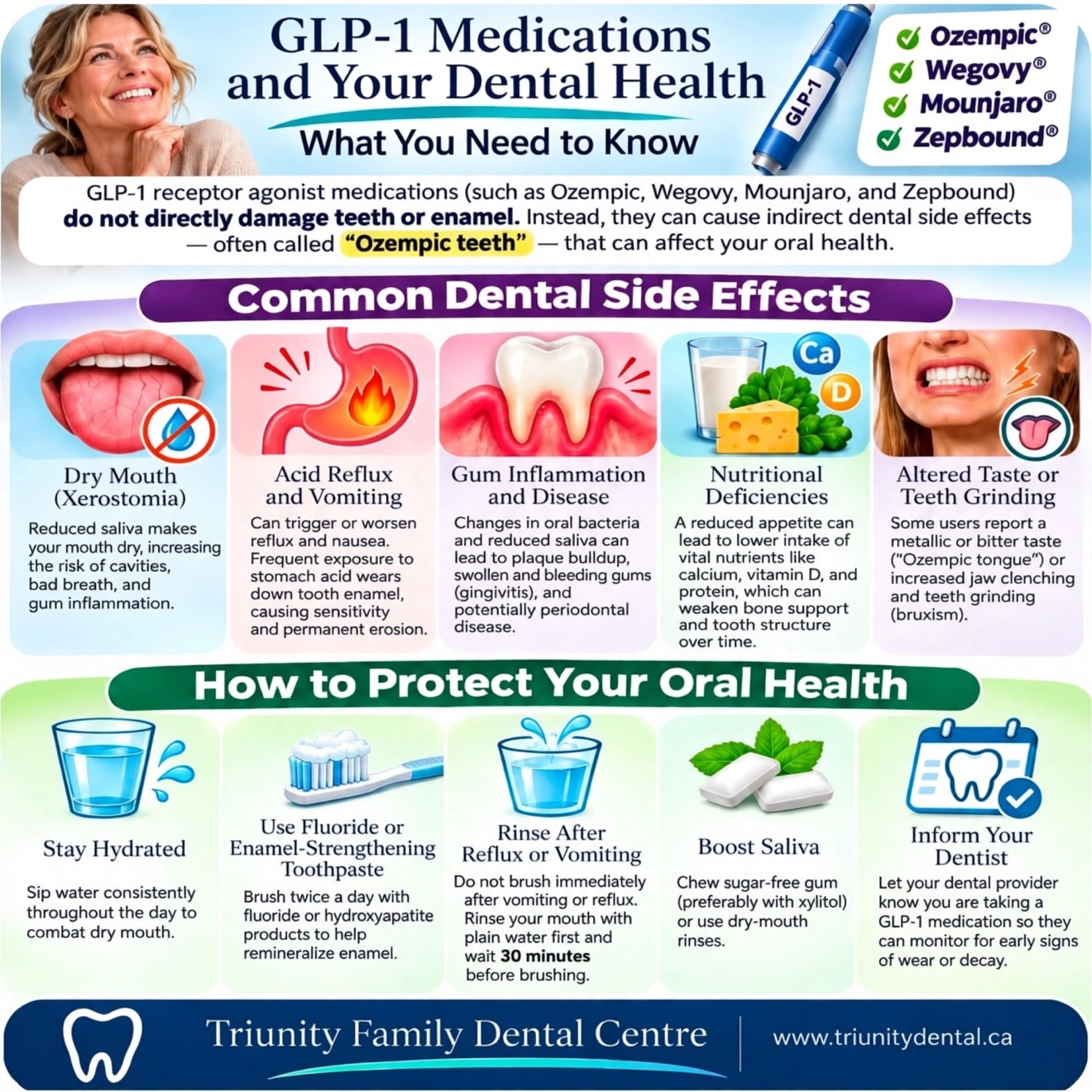
GLP-1 medications — Ozempic, Wegovy, Mounjaro, and Zepbound — have become household names. If you take one of them, you may have heard the term “Ozempic teeth.” Here is the reassuring part first: these medications do not directly damage your teeth or enamel. But they can cause indirect side effects that are worth knowing about, because they can affect your oral health over time.
Four brand names, two medications
The four names actually describe just two drugs:
- Ozempic (semaglutide) — a once-weekly injection approved for type 2 diabetes.
- Wegovy (semaglutide) — the same drug as Ozempic, at a higher dose, approved for chronic weight management.
- Mounjaro (tirzepatide) — a once-weekly injection approved for type 2 diabetes. Tirzepatide acts on two gut-hormone receptors, GLP-1 and GIP, while semaglutide acts on GLP-1 alone.
- Zepbound (tirzepatide) — the same drug as Mounjaro, approved for chronic weight management (and for obstructive sleep apnea in people with obesity).
In clinical trials, tirzepatide produced greater average weight loss than semaglutide. But the same molecule does not mean the same brand, dose, or purpose — and whichever one you take, the dental side effects below apply, because they all work the same way: by slowing digestion and reducing appetite.
Common dental side effects
- Dry mouth (xerostomia) — Reduced saliva makes your mouth dry, increasing the risk of cavities, bad breath, and gum inflammation.
- Acid reflux and vomiting — These medications can trigger or worsen reflux and nausea. Frequent exposure to stomach acid wears down tooth enamel, causing sensitivity and permanent erosion.
- Gum inflammation and disease — Changes in oral bacteria and reduced saliva can lead to plaque buildup, swollen and bleeding gums (gingivitis), and potentially periodontal disease.
- Nutritional deficiencies — A reduced appetite can lead to lower intake of vital nutrients like calcium, vitamin D, and protein, which can weaken bone support and tooth structure over time.
- Altered taste or teeth grinding — Some users report a metallic or bitter taste (“Ozempic tongue”) or increased jaw clenching and teeth grinding (bruxism).
How to protect your oral health
- Stay hydrated — Sip water consistently throughout the day to combat dry mouth.
- Use fluoride or enamel-strengthening toothpaste — Brush twice a day with fluoride or hydroxyapatite products to help remineralize enamel.
- Rinse after reflux or vomiting — Do not brush immediately after vomiting or reflux. Rinse your mouth with plain water first and wait 30 minutes before brushing.
- Boost saliva — Chew sugar-free gum (preferably with xylitol) or use dry-mouth rinses.
- Inform your dentist — Let your dental provider know you are taking a GLP-1 medication so they can monitor for early signs of wear or decay.
Questions about your smile? Book a visit with us: https://triunitydental.com/contact-us/ — or call 204-831-6633.