Electric Toothbrush: The Advantage Over Manual Brushing
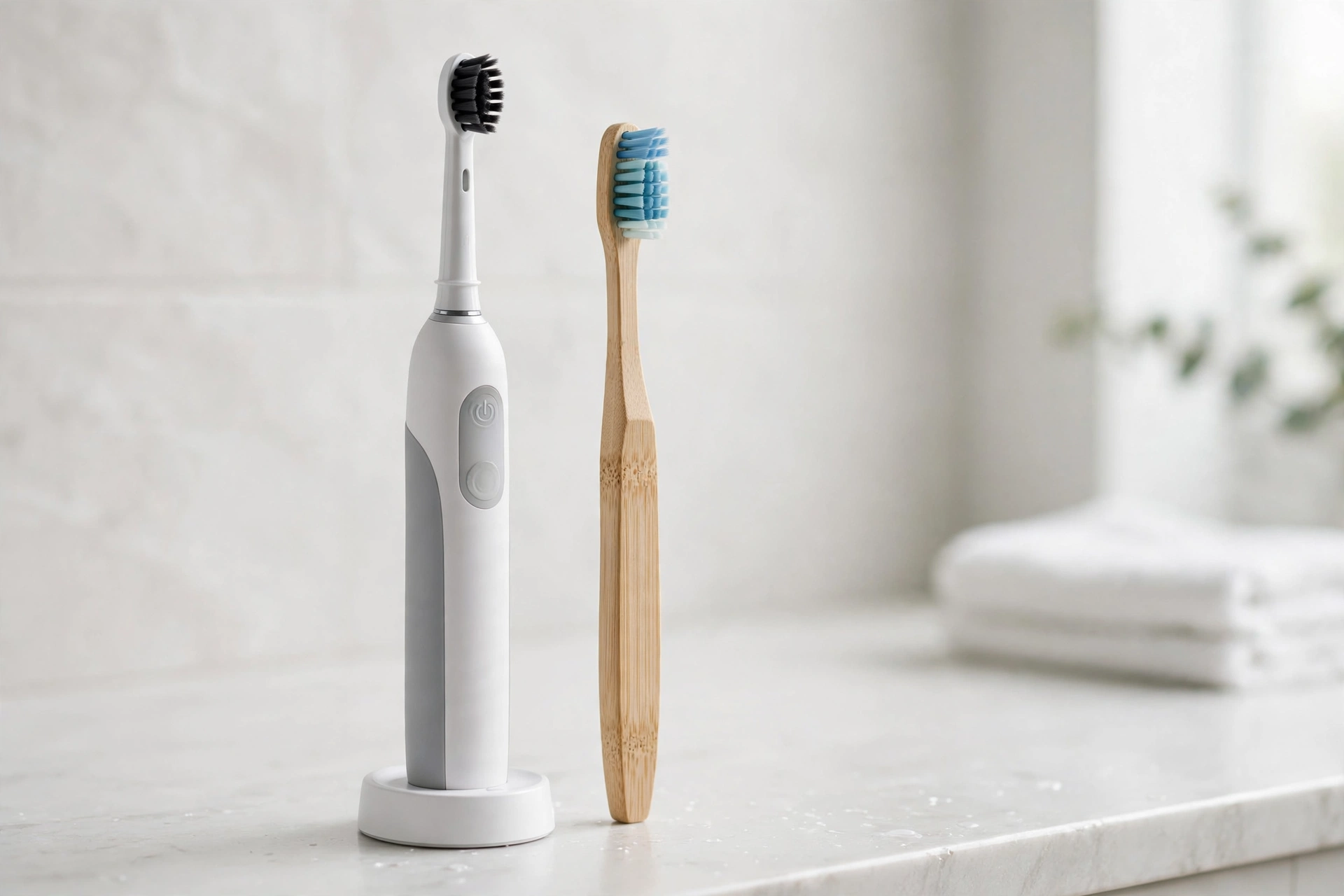
A manual toothbrush works perfectly well when used properly — but many people find an electric toothbrush makes good brushing easier. Here is what the electric version actually offers. The advantage An electric toothbrush delivers thousands of brush movements per minute, far more than a hand can manage, and it does so at a steady, … Read more

Sugar and Cavities: How Sugar Leads to Tooth Decay

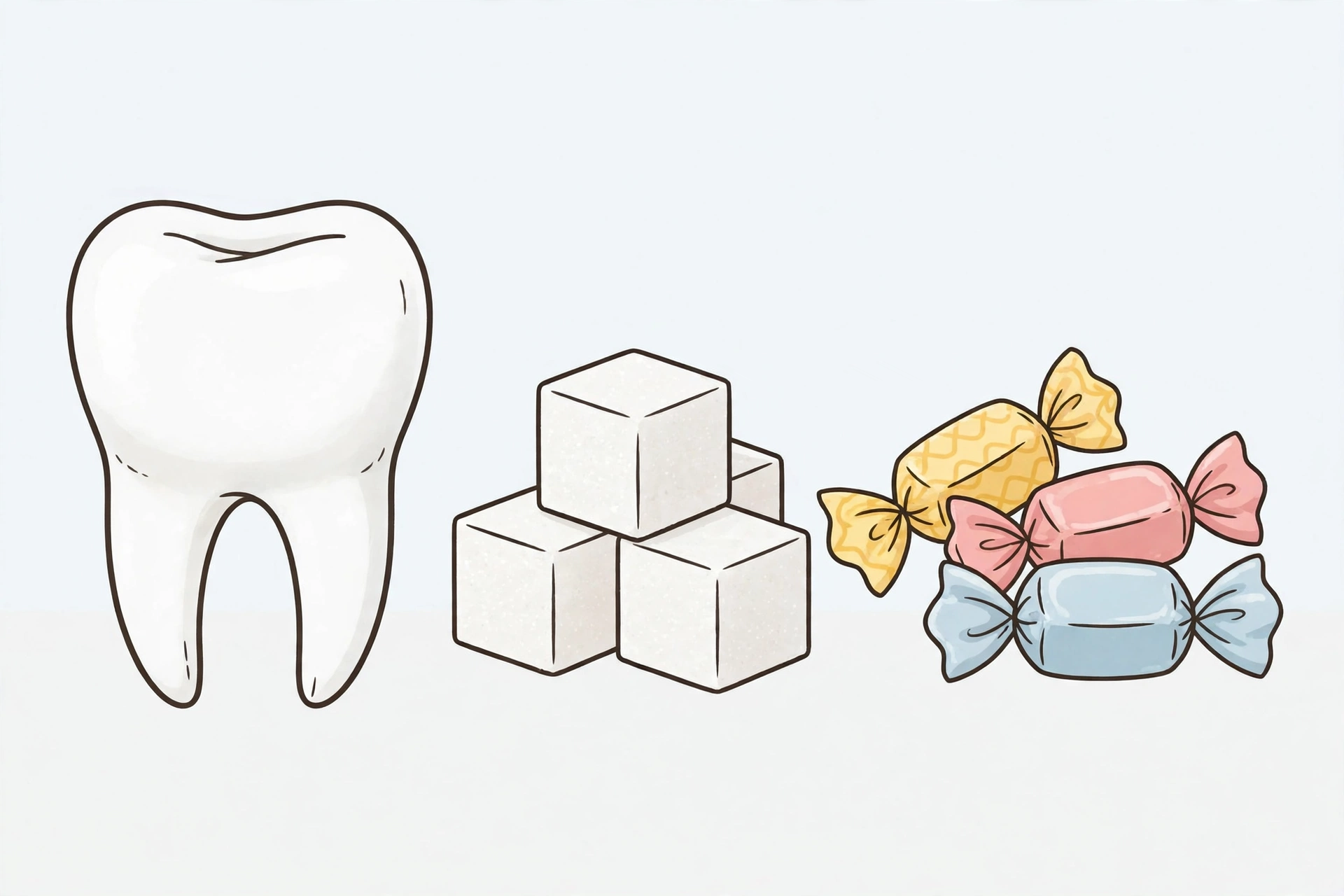
Most people know sugar is bad for teeth. Fewer people know exactly how it causes damage — and understanding the process makes it much easier to prevent. How a cavity forms Your mouth is home to bacteria that feed on sugars from food and drink. As they feed, they produce acid. That acid attacks the … Read more

Vitamin C and Your Smile: Why It Matters for Healthy Gums

Brushing and flossing get most of the credit for a healthy smile, but what you eat matters too. Vitamin C is one of the nutrients your gums depend on most. What vitamin C does for your mouth Vitamin C helps your body make collagen, the protein that holds gum tissue together and supports healing. When … Read more

Dental Implications of Common GLP-1 Drugs

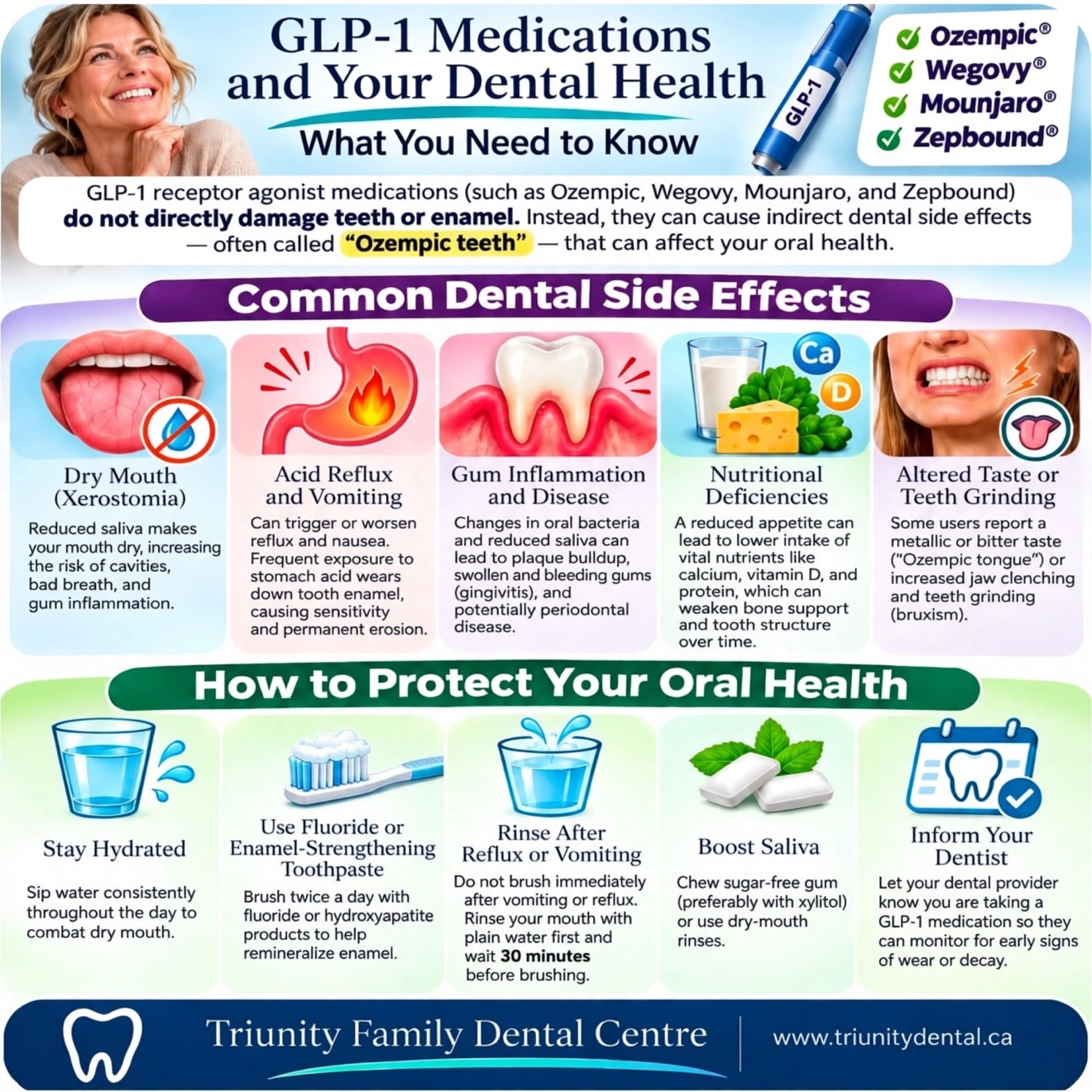
GLP-1 medications — Ozempic, Wegovy, Mounjaro, and Zepbound — have become household names. If you take one of them, you may have heard the term “Ozempic teeth.” Here is the reassuring part first: these medications do not directly damage your teeth or enamel. But they can cause indirect side effects that are worth knowing about, … Read more

The Painful Wisdom Tooth: Why It Hurts and What to Do

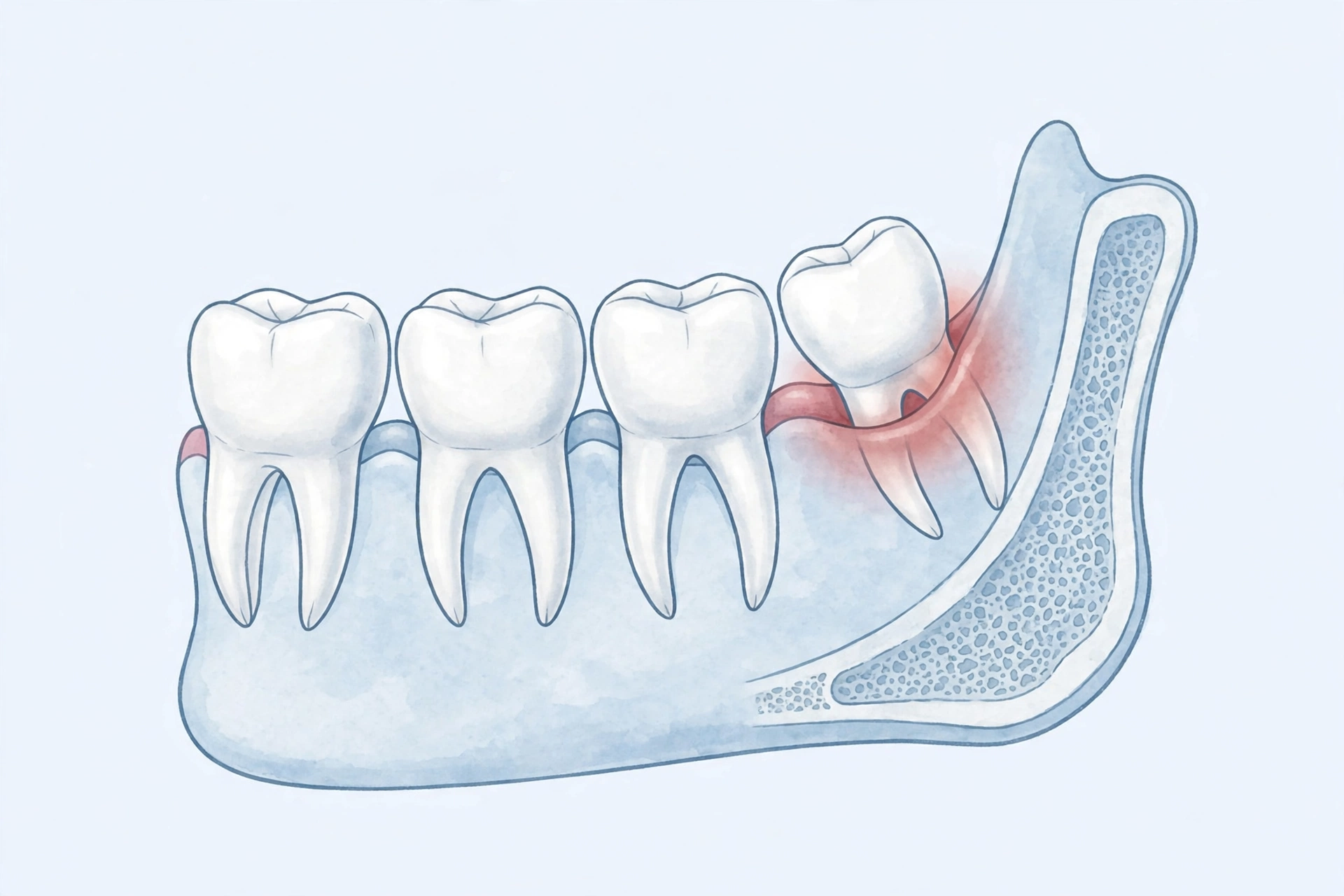
Wisdom teeth are the last molars to arrive, usually in the late teens or early twenties. For many people they come through without trouble. For others, they cause pain — and that pain is a sign worth paying attention to. Why wisdom teeth hurt The most common reason is space. If the jaw does not … Read more

Losing a Loose Baby Tooth: What’s Normal and When to Call the Dentist

Most children start losing their baby teeth around age 6, usually the front teeth first. Children have 20 primary teeth, and over the next few years each one loosens and falls out to make room for the adult tooth underneath. A wobbly tooth is a normal part of growing up — but it helps to … Read more

Nightguards: a brief description

Night guards are thin plastic appliances that slips over the surface of your teeth. They are not designed to stop the grinding or clenching of the jaw, but rather provide a cushion to minimize the force ( estimated at  1,200 Newtons of force ) and on unprotected teeth, that can cause serious damage. A night … Read more

A CHILD’S FIRST DENTAL VISIT

Visiting your dentist at an early age is a good start to dental care. The Canadian Dental Association (CDA) advises that a child have their first dental visit at about 6months of age when the first tooth begins to erupt or by 1 year of age, whichever comes first. The first step is choosing a … Read more

BLEACHING: AT HOME VS IN CLINIC

Bleaching the teeth can be done in various ways. Commonly, it can be done at home using kits gotten from stores or by ones prescribed by the dentist. It can also be carried out in the dental clinic by the dentist. Note that there is a wide variety of bleaching and whitening products available in … Read more

Baby Bottles and Your Baby’s Teeth

The health of a child’s baby teeth is as important as in adults. The proper care of a child’s baby teeth is extremely important for their overall health as well as the health of future permanent teeth. Even though the teeth the child has are temporary they are still susceptible to cavities. The cavities in … Read more