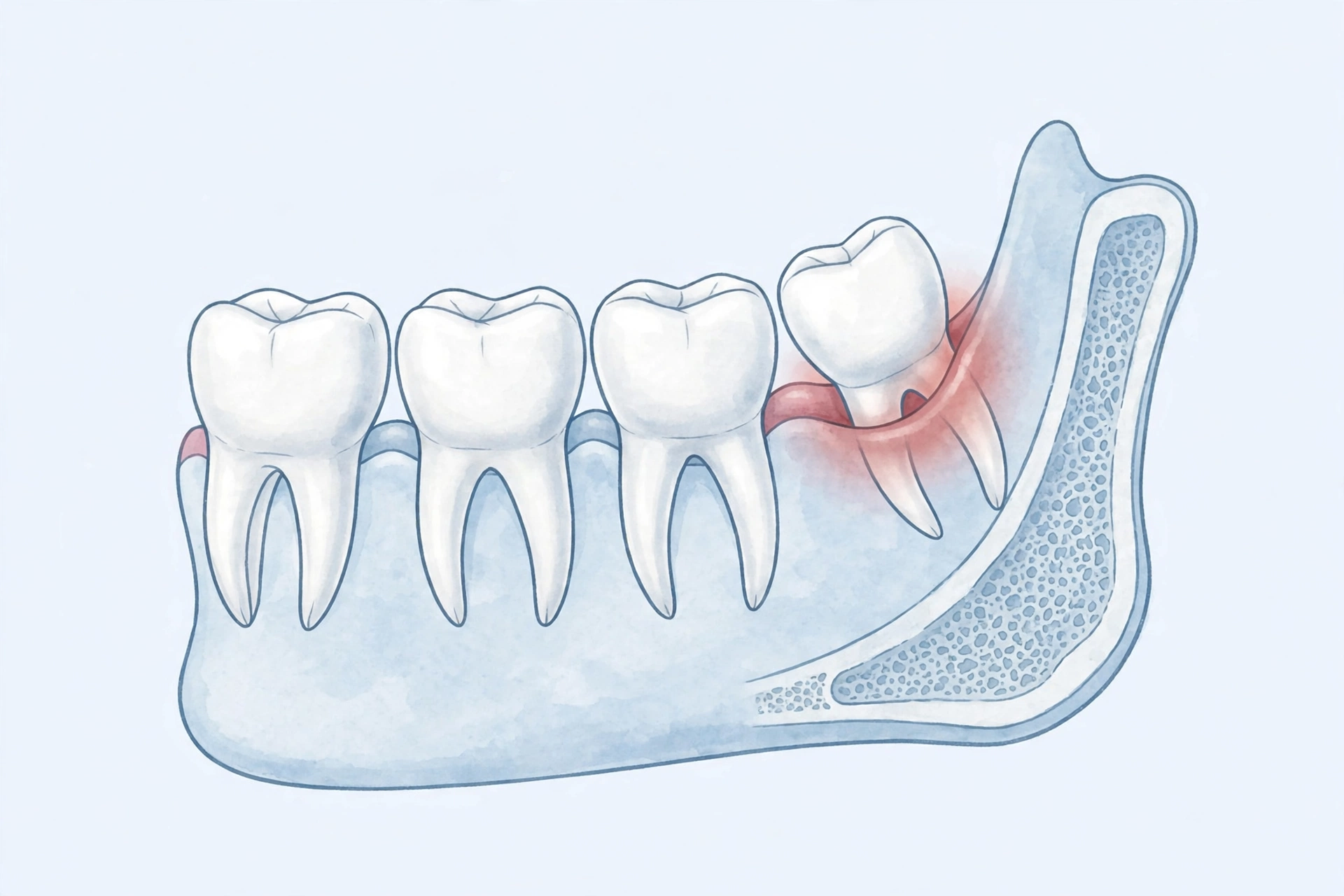
Wisdom teeth are the last molars to arrive, usually in the late teens or early twenties. For many people they come through without trouble. For others, they cause pain — and that pain is a sign worth paying attention to.
Why wisdom teeth hurt
The most common reason is space. If the jaw does not have enough room, a wisdom tooth may only partly break through the gum, or grow at an angle and press against the neighbouring tooth. A partly erupted tooth is also hard to clean, so bacteria can collect under the gum flap and cause swelling and infection — a condition dentists call pericoronitis. Decay can also start on a wisdom tooth that is difficult to reach with a brush.
Signs to watch for
- Aching or throbbing pain at the back of the mouth
- Swollen, red, or tender gums around the tooth
- Difficulty opening the mouth fully or chewing
- A bad taste in the mouth, or bad breath that does not clear up
- Fever or swelling in the jaw or face
What to do
Rinse gently with warm salt water, stick to soft foods, and avoid poking at the area. Over-the-counter pain relief can help in the short term if you follow the directions on the package. But home care is only a stopgap — a painful wisdom tooth should be checked by a dentist promptly, because the cause needs to be found before it gets worse. Depending on the situation, the dentist may simply monitor the tooth, treat the infection, or recommend removing it.
Questions about your smile? Contact us to book a visit: https://triunitydental.com/contact-us/ — or call 204-831-6633.